
Blogs Articles, Infographics A Pain That Shouldn’t Be Normalized
Understanding the Symptoms Behind the Syndrome: Internal Symptoms of PCOS
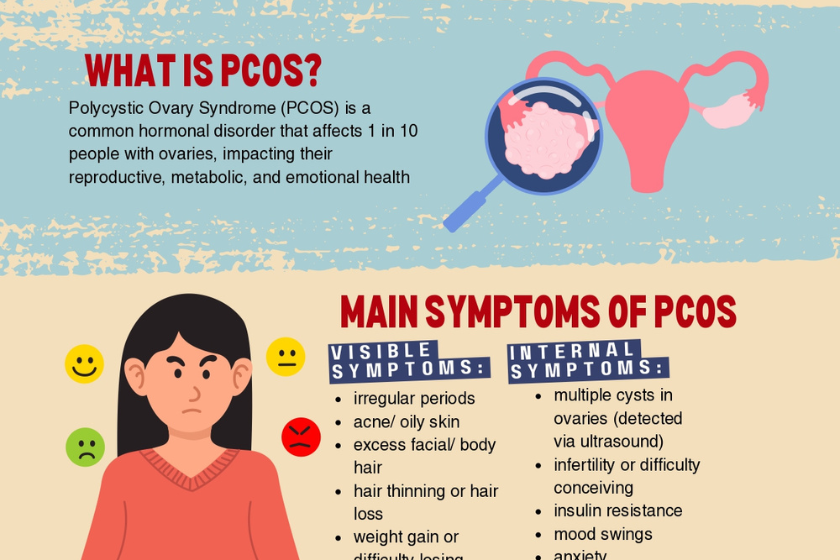
Blogs Articles, Infographics Understanding the Symptoms Behind the Syndrome: Internal Symptoms of PCOS This infographic breaks down the basics of PCOS—what it is, what causes it, common symptoms, and how it can be managed through lifestyle changes and medical treatment. It’s a quick guide to help one understand the condition better.
Why Period Education Should Begin Before Puberty
Blogs Articles, Infographics Why Period Education Should Begin Before Puberty Period education is often treated like a fire drill, introduced in haste, usually right before or after menarche arrives, and delivered with minimal context. But menstruation is not an emergency panic mode situation; more so, it’s about biology. When biology is taught too late, room for fear, misinformation, and shame creeps in, filling gaps of knowledge that teenagers often shy away from questioning. Starting period education before puberty enables children, regardless of their gender, to look at menstruation as a normal and healthy biological process, rather than a taboo. It equips young children with language, science, and empathy to understand the topic. In many school systems, menstrual education for children is introduced between the ages of 11 to 12—around the time some students are experiencing their first periods. Globally, the average age of menarche spans from 9 to 15 years. When education lags behind biology, an obvious sense of discomfort, confusion, and silence emerges. A girl who gets her first period without understanding what it is often associates the experience with panic or shame. Inadequate preparation leads to increased school absenteeism, lowered self-esteem, and, in a few cases, long-term negative attitudes towards one’s own body. On the other hand, a child who has the knowledge of what menstruation is, how it works, and why it happens is less likely to be overstimulated and overwhelmed by the experience and more likely to view it via a lens of understanding and normalcy, exhibiting a healthier mindset and outlook. Starting period education at ages 8 and 9 lays a foundation of trust towards one’s own body. This should not be through complex hormonal graphs, but rather through easy, accurate, and digestible bits of information. Demystifying menstruation and reframing it as an important rite of passage, early education can help children at that age feel curious and empowered, not embarrassed. Normalising such conversations before shame enters the picture reduces the area it has left to settle in. Menstrual education is imminent, especially for children with culturally conservative or under-resourced backgrounds, where menstruation traipses through the ushered silences. For these students, school might be the only safe space where reproductive health is ever discussed and not shrouded in silence. Waiting until they may be “old enough” to have such conversations might just mean waiting too long. Realistically, another reason to start early would be boys. When only girls are pulled aside for the “period talk”, it reinforces the idea that menstruation is a secret and something to be hidden. It completely otherizes the experience, rather than inculcating it into a broader pursuit of biological education. If both boys and girls learn together and early on, it helps to dismantle the stigma before it solidifies. Boys who understand the science behind periods are less likely to tease and more likely to create a supportive environment as empathetic partners, brothers, and friends. Studies have consistently depicted that an increase in early menstrual education has resulted in reduced period anxiety, improved hygiene management, and boosted school attendance in adolescent girls. A 2019 report from UNESCO also reinforces the importance of age-appropriate, pre-puberty menstrual education. (UNESCO, 2019) Students are likely to demonstrate significantly higher comfort levels with menstruation, dispelling the shame and embarrassment. More than anything, menstrual education revolves around the concept of empathy. Teaching young children to grow up informed and not blindsided helps them realise that bodies aren’t gross, biology isn’t dirty, and gendered health isn’t optional knowledge. In conclusion, withholding knowledge of the delay period is more of a disservice than kindness. The earlier children learn about menstruation, the earlier they learn to take ownership of their bodies, advocate for their health, and approach others with the level of compassion and empathy they deserve.
Navigating Mental Health During Menstruation
Blogs Articles, Infographics Navigating Mental Health During Menstruation The menstrual cycle, typically lasting between 21 to 35 days, can significantly impact a person’s mental health and well-being due to hormonal fluctuations that influence mood, cognition, and emotional balance. While physical symptoms like cramps and fatigue are widely recognized, the cognitive and emotional changes that accompany the cycle are often less understood or, at times, even overlooked. This article explores the biological stages of the menstrual cycle, the hormonal changes that fuel them, and how these shifts contribute to psychological patterns such as premenstrual syndrome (PMS). Understanding the cycle: four phases and their effects There are four phases in the menstrual cycle: menstruation, the follicular phase, ovulation, and the luteal phase. Each of these stages is characterized by distinct hormonal activity that can influence how a person feels, both physically and emotionally. Menstruation (Day 1-5): Menstrual bleeding or the period commences as the uterus lining, scientifically known as the endometrium, sheds due to an immense drop in the estrogen and progesterone levels. Commonly marked by uterine cramps and fatigue, this phase mainly looks at the uterine cycle. Follicular Phase (Day 1-13): Overlapping with the menstrual phase, the follicular phase mainly looks at the activity of follicle-stimulating hormone (FSH), which stimulates ovarian follicle growth and maturation from the primary follicle to the graafian (secondary) follicle. Additionally, the estrogen begins to rise steadily, leading to increased energy, improved mood, and sometimes even visible changes like clearer skin and a heightened sense of self-confidence. Ovulation (Day 14): Triggered by a surge in the luteinizing hormone (LH), this phase also witnesses a peak in the estrogen levels that cause the release of an egg from the follicle in the ovary. Females also report feeling their best during this time, characterized by them feeling more sociable, energetic, and focused. Luteal phase (Day 15-28): Progesterone levels rise as it becomes the dominant hormone, preparing the body for a pregnancy. The corpus luteum, which forms from the ruptured follicular cells, secretes this progesterone, preparing the uterine lining for implantation. However, if fertilisation does not occur, the hormone levels plummet. This decline in the levels is what mainly leads to symptoms that are associated with PMS. Hormones and the brain Hormonal fluctuations during the cycle not only influence the reproductive system but also the brain. Estrogen modulates neurotransmitters like serotonin and dopamine, both associated with mood regulation, motivation, and cognition. As estrogen levels increase, specifically during the follicular and ovulatory phases, individuals report having greater mental clarity and emotional stability. Progesterone, the hormone most prominent in the luteal phase, interacts with GABA receptors, which can have a calming effect on the person. Although in some people, this specific hormonal balance may contribute to increased anxiety, moodiness, and irritability. The sharp decline in estrogen and progesterone that leads up to the menstrual period is said to have a major role in the emotional symptoms experienced in the luteal phase PMS: a closer look Most individuals report experiencing physiological or psychological changes in the week that leads up to menstruation. The symptoms, often ranging from fatigue, bloating, and acne flare-ups to emotional difficulties like irritability, low mood, and social withdrawal, fall under the umbrella of Premenstrual Syndrome (PMS) PMS is frequently oversimplified as mere moodiness, but it is surrounded by a wide spectrum of hormonal and neurochemical changes. Although the exact reason is still unclear, the main theory behind PMS is that some people are more sensitive to normal hormonal fluctuations, especially the withdrawal effects as estrogen and progesterone fall. Mental Health and the Menstrual Cycle Mood, energy, and cognitive functioning can significantly shift across the menstrual cycle. During the follicular and ovulatory phases, women tend to experience higher energy levels, clearer thinking, and improved sociability. On the other hand, the luteal phase is associated with a greater likelihood of negative mood states and higher emotional fragility. It is pertinent to emphasise that these experiences are not universal, and each female has a different experience. While many females notice cyclical changes, others may not observe any dramatic shifts. Factors like mental health, stress levels, genetics, and lifestyle habits all contribute to how pronounced these effects are. Conclusion The menstrual cycle is biologically intricate, exerting force beyond just the reproductive organs. The hormonal changes that take place affect not only physical health, but emotional health too. Understanding the deeper connections between hormonal rhythms and mental health offers valuable insight into the lived experiences of all females.